The EAB Invasion in Central Illinois: A Decade of Devastation
Over the past decade, the Emerald Ash Borer (Agrilus planipennis)—an invasive metallic-green buprestid beetle native to northeastern Asia—has fundamentally altered the urban forest canopy across Springfield, Chatham, Rochester, and the greater Sangamon County region. Green ash and white ash trees, which once constituted up to twenty-five percent of Central Illinois street and parkway plantings, have been decimated. For homeowners with remaining ash trees, understanding whether to invest in preventative chemical treatment or schedule proactive removal is a critical financial and safety decision. The Emerald Ash Borer has devastated millions of ash trees across Sangamon County, transforming once-shaded suburban streetscapes into hazardous deadwood zones.
Identifying the Symptoms: Canopy Dieback, Epicormic Shoots and D-Holes
The destructive biology of the Emerald Ash Borer takes place hidden beneath the outer bark. While adult beetles feed harmlessly on ash foliage during early summer, their larvae tunnel through the tree's vital phloem and cambium layers, carving serpentine S-shaped feeding galleries. These galleries effectively girdle the tree from the inside out, choking off the upward flow of water and nutrients from the root system. Within two to four years of initial larval infestation, an untreated ash tree will suffer complete vascular failure. EAB larvae feed voraciously on the tree's phloem and cambium tissues, carving S-shaped galleries that choke off the upward movement of water and nutrients.
Need Professional Advice for Your Trees?
Call our local dispatch desk at (858) 780-5212. We provide prompt on-site evaluations across Springfield and Sangamon County.
The Treatment Threshold: When Is Trunk Injection Still Viable?
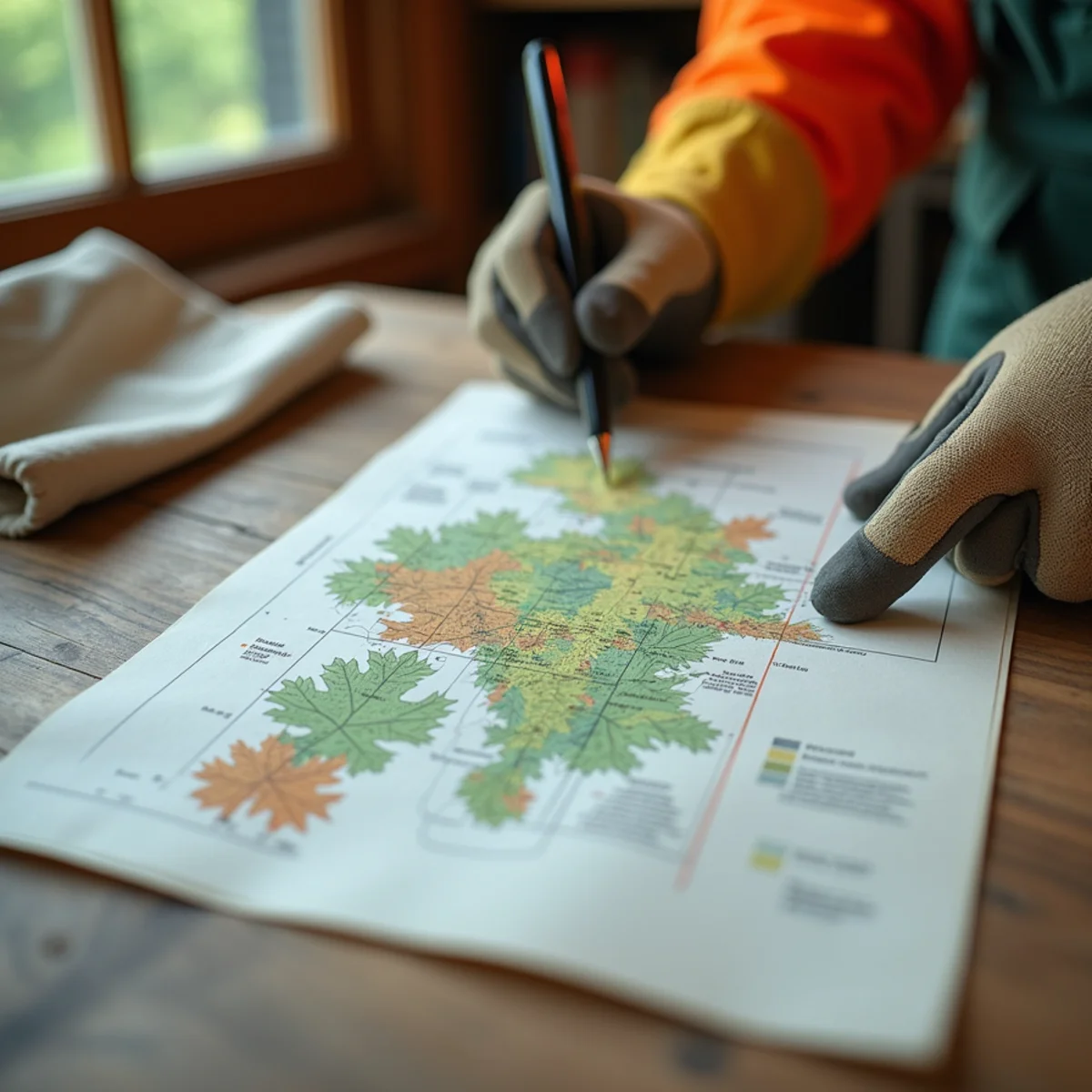
Detecting an early EAB infestation requires careful observation of specific canopy and trunk symptoms. Initial indicators include thinning foliage and crown dieback beginning in the upper one-third of the canopy. As the tree attempts to survive, it pushes out dense clusters of 'epicormic sprouts'—frequently called water suckers—along the lower trunk and main branch unions. Closer inspection often reveals distinct D-shaped exit holes (approximately 1/8 inch wide) left by emerging adult beetles, as well as extensive bark flecking and 'blonding' caused by woodpeckers foraging for overwintering larvae. Key indicators of EAB infestation include D-shaped exit holes, crown thinning, heavy epicormic sprout clusters, and severe bark blonding caused by foraging woodpeckers.
The Economics of Multi-Year Insecticide Injections vs. Removal
Arborists evaluate ash trees for chemical preservation using the '30 percent dieback threshold.' Systemic trunk micro-injections using professional-grade emamectin benzoate (such as Tree-äge) have proven highly effective at eliminating EAB larvae for up to two full growing seasons. However, the chemical relies on the tree's vascular system to distribute the active ingredient throughout the canopy. If an ash tree has already lost more than 30 to 40 percent of its canopy foliage, its vascular transport channels are too damaged to circulate the insecticide, rendering chemical treatment futile. Systemic trunk injections with emamectin benzoate provide exceptional protection, but the treatment requires a functional vascular system with at least 60 to 70 percent healthy canopy.
Why Dead Ash Trees Become Dangerous 'Snap Hazards' Almost Overnight
Property owners must also weigh the multi-year economics of ongoing insecticidal treatments against permanent removal. Professional trunk injections cost between $150 and $350 every two years depending on tree diameter. Over a ten-to-fifteen-year horizon, recurring treatments can equal or exceed the cost of complete removal. If a tree is a prized specimen providing substantial shade and property value, ongoing treatment is well justified; however, if the tree is poorly situated or already declining, removal is the more practical long-term choice. Over a ten-year timeframe, repeated chemical injections must be weighed against the permanent cost and peace of mind of removing declining ash trees.
Removal Logistics: Why Dead Ash Requires Bucket Trucks and Cranes
One of the most alarming characteristics of trees killed by Emerald Ash Borer is how rapidly the wood becomes structurally compromised. Within months of mortality, dead ash timber dries out, losing all moisture and natural elasticity. Limbs become extremely brittle, snapping suddenly under minimal wind loads with no preliminary creaking or warning signs. The root flare also rots rapidly, making standing dead ash trees notorious 'snap hazards' that threaten nearby homes, vehicles, and pedestrians. Dead ash trees lose moisture rapidly, becoming brittle snap hazards that can collapse unexpectedly even under mild wind conditions.
Ash Wood Disposal Regulations and Illinois Quarantine Guidelines
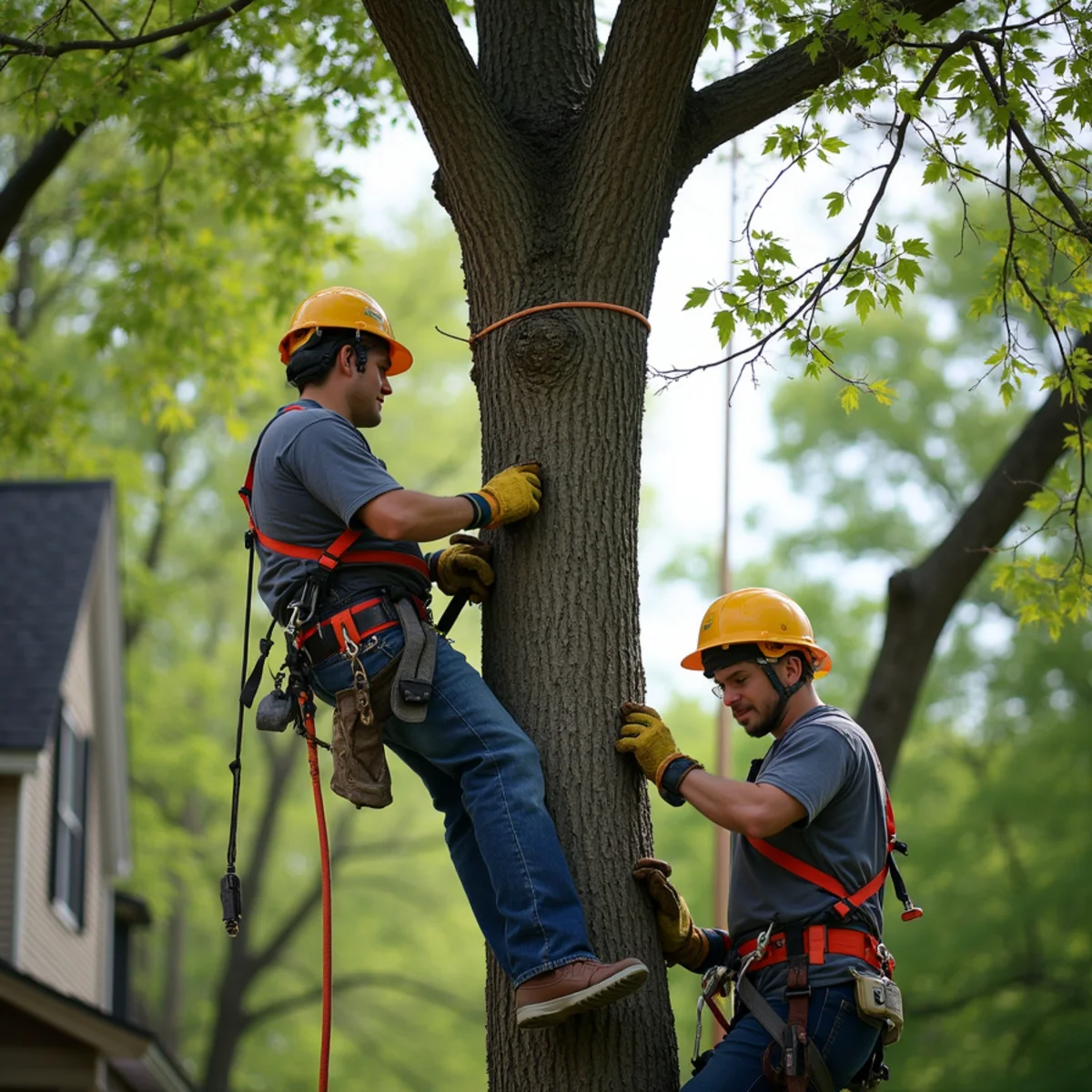
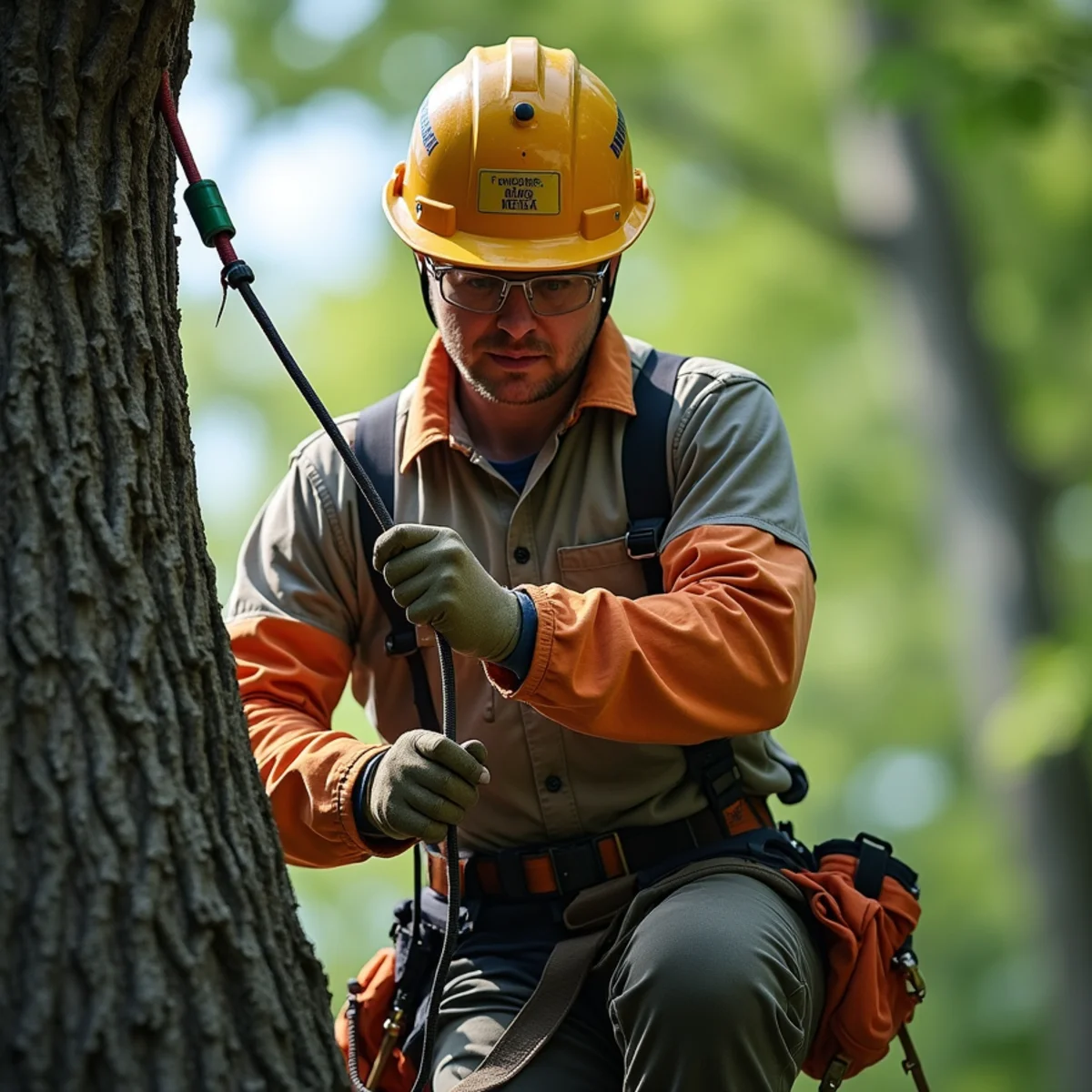
Because dead ash limbs are so brittle, professional tree climbers cannot safely tie into or ascend dead ash trees. Standard manual rigging techniques are too hazardous. Removing a dead ash tree requires specialized access machinery—such as 75-foot insulated aerial bucket trucks, articulating spider lifts, or commercial mobile cranes—allowing arborists to dismantle the tree from overhead without applying mechanical loads to brittle wood. Consequently, delaying removal only increases the danger and equipment cost. Because dead ash wood snaps unpredictably, tree workers cannot safely climb them, necessitating the use of specialized bucket trucks, spider lifts, or cranes.
Frequently Asked Questions on Emerald Ash Borer in Springfield
The Illinois Department of Agriculture previously maintained strict regional firewood and ash timber movement quarantines to contain borer spread. Today, proper disposal through local commercial wood chippers and licensed municipal green waste facilities remains essential to prevent lingering pest proliferation. Planting disease-resistant native alternatives—such as swamp white oak, Kentucky coffeetree, or tulip poplar—ensures your landscape regenerates with lasting ecological diversity. Property owners in Sangamon County should replace removed ash trees with resilient native species like swamp white oak, Kentucky coffeetree, or bald cypress.
Frequently Asked Questions on Emerald Ash Borer in Springfield
No. Untreated ash trees in Central Illinois have a mortality rate approaching 99% due to heavy established populations of Emerald Ash Borer across Sangamon County.