
The Turf Restoration Challenge: Why Grass Struggles Over Fresh Grindings
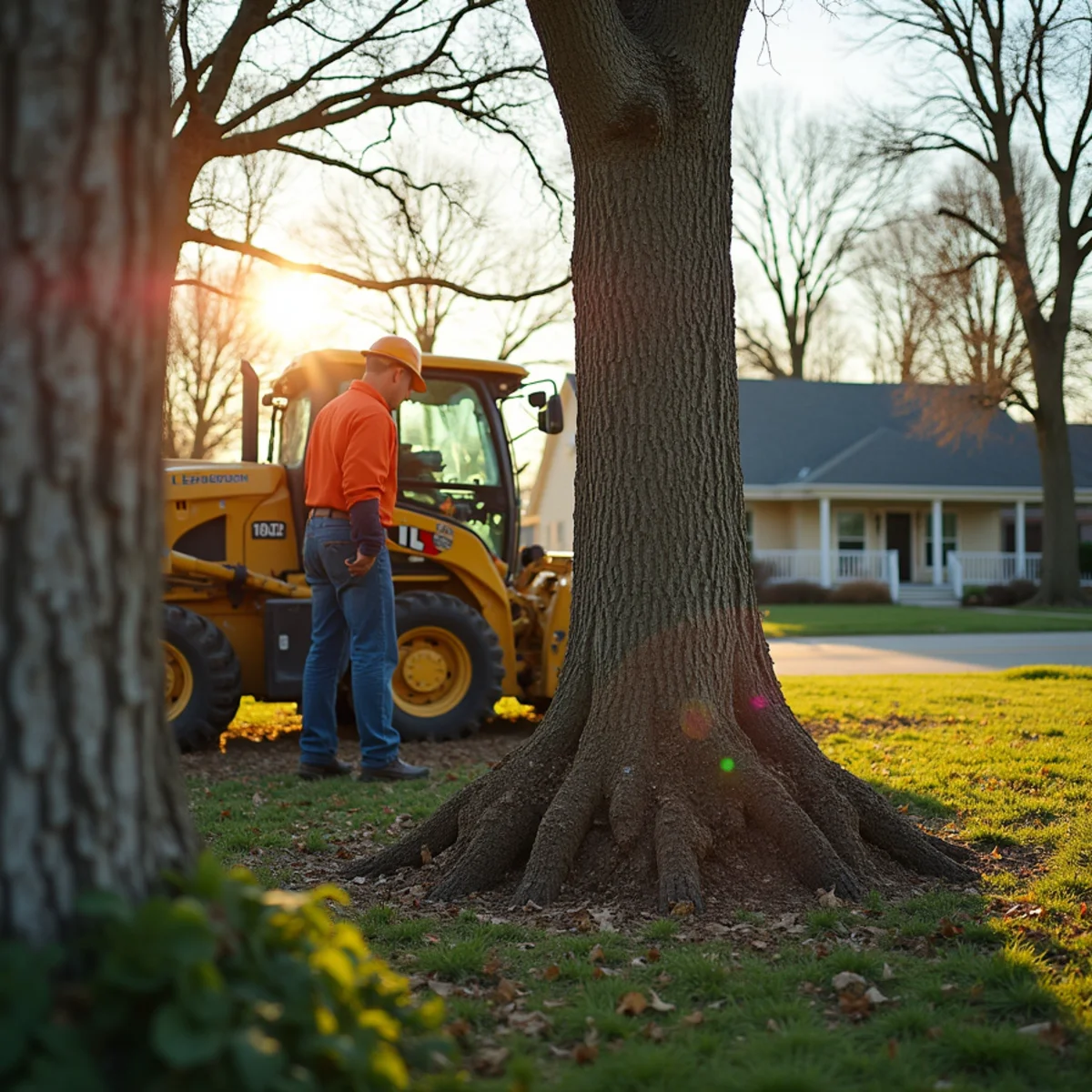
After a commercial stump grinder has pulverized an unsightly tree stump 8 to 14 inches below grade, homeowners in Springfield, Chatham, and Sangamon County are eager to erase all evidence of the old tree and restore a lush, uniform green lawn. However, simply throwing grass seed directly over the pile of fresh wood shavings almost always results in patchy, yellow, stunted turf that quickly dies. Growing thick, healthy grass over a ground stump site requires following a methodical agronomic restoration process. Restoring lush, green turf over a ground stump site requires overcoming the biological hurdles of raw wood chips and nitrogen tie-up.
Step 1: Excavating the Excess Wood Chips and Shavings
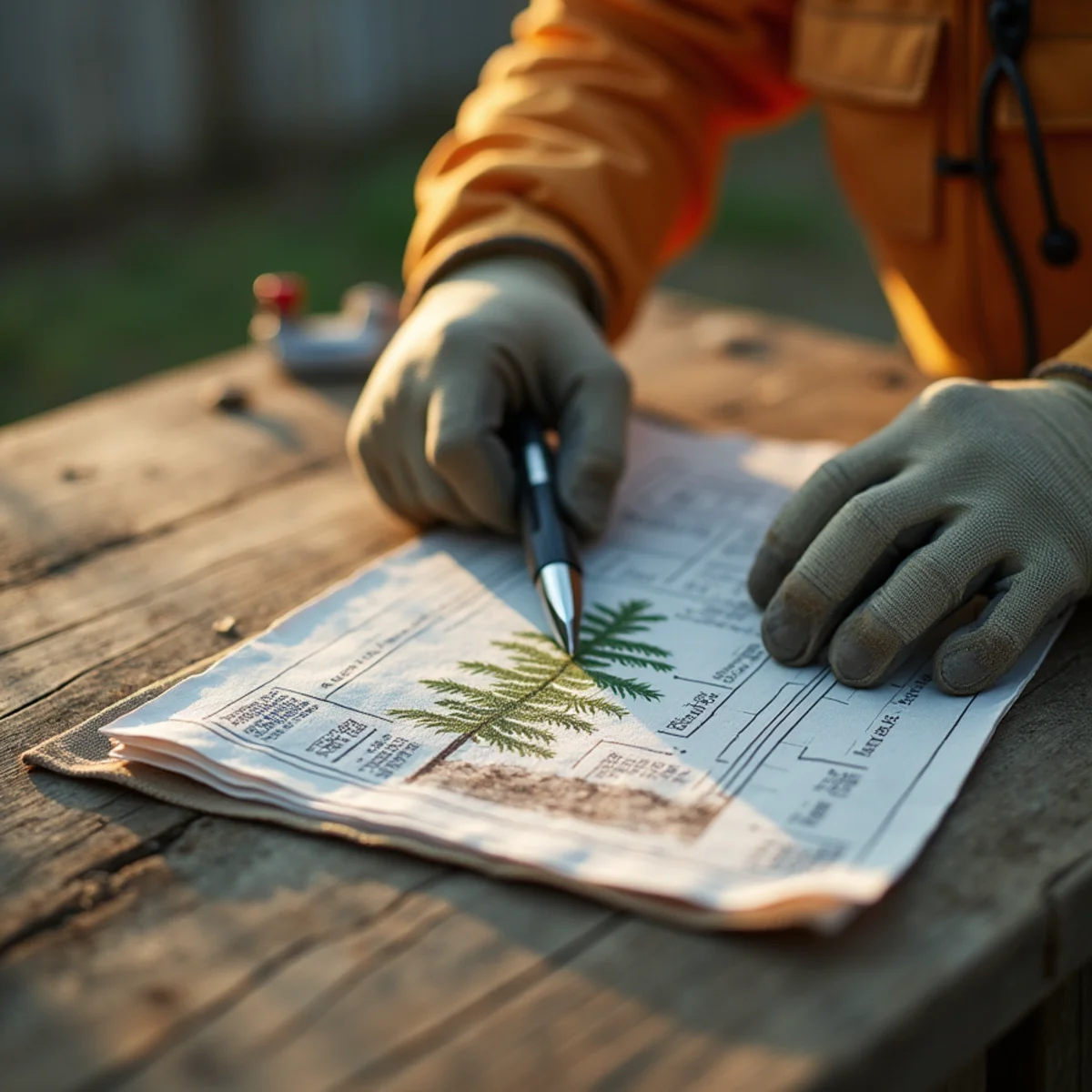
The primary reason grass fails to grow over fresh grindings is the extreme carbon-to-nitrogen imbalance. Raw wood chips possess a carbon-to-nitrogen (C:N) ratio of approximately 300:1 to 500:1. When wood chips mix into the soil, indigenous soil microorganisms proliferate to break down the wood cellulose. To fuel their metabolism, these microbes consume all available soil nitrogen, effectively starving grass seedlings of the essential nutrient needed for chlorophyll production and root elongation. Fresh wood chips have an extreme carbon-to-nitrogen ratio that causes soil microbes to consume all available nitrogen, starving grass seedlings.
Need Professional Advice for Your Trees?
Call our local dispatch desk at (858) 780-5212. We provide prompt on-site evaluations across Springfield and Sangamon County.
Step 2: Addressing the Nitrogen Tie-Up (Carbon-to-Nitrogen Imbalance)
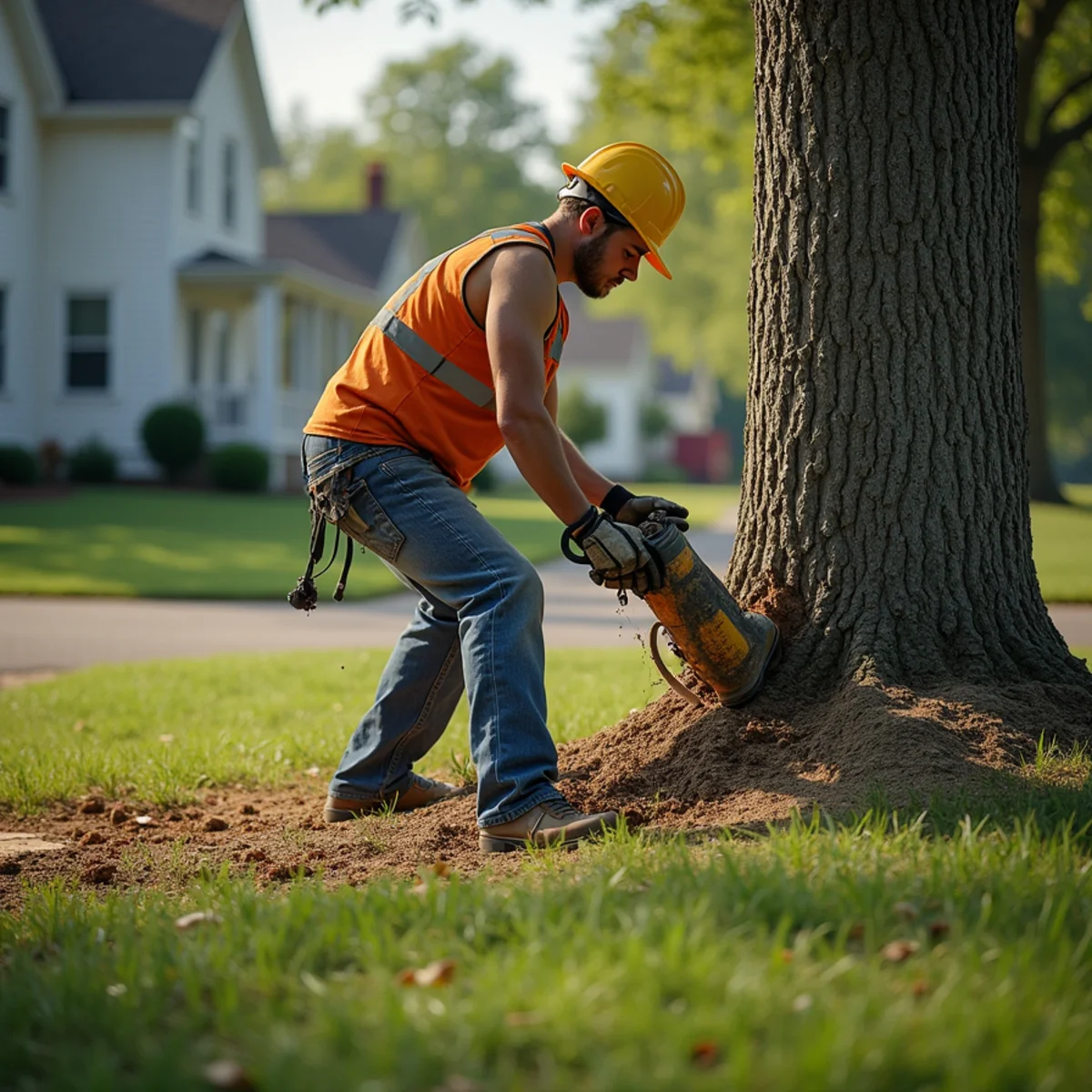
The first physical step is excavating the bulk of the wood chip mulch. Using a flat shovel, scoop, or wheelbarrow, remove the excess wood shavings down to approximately 4 to 6 inches below surrounding turf grade. You do not need to excavate every microscopic wood particle, but removing the high-volume mulch mound is essential. These clean, excavated wood chips make excellent organic mulch for perimeter shrub beds, woodland pathways, or landscape tree rings. Excavating excess wood chip mulch 4 to 6 inches below grade removes the bulk of the carbon mound, creating space for rich topsoil.
Step 3: Backfilling with High-Quality Central Illinois Loam Topsoil
The second step is counteracting the remaining carbon tie-up by amending the sub-base with nitrogen. Before adding topsoil, incorporate a balanced, fast-release high-nitrogen starter fertilizer (such as 24-5-11 or 18-24-12) or organic compost across the excavation floor. This supplemental nitrogen feeds the wood-decay bacteria, ensuring they do not steal nitrogen away from your developing grass root zone. Incorporating high-nitrogen starter fertilizer into the sub-base feeds wood-decay bacteria, ensuring newly developing roots receive adequate nutrients.
Step 4: Compaction and Settling Management to Prevent Future Sinkholes
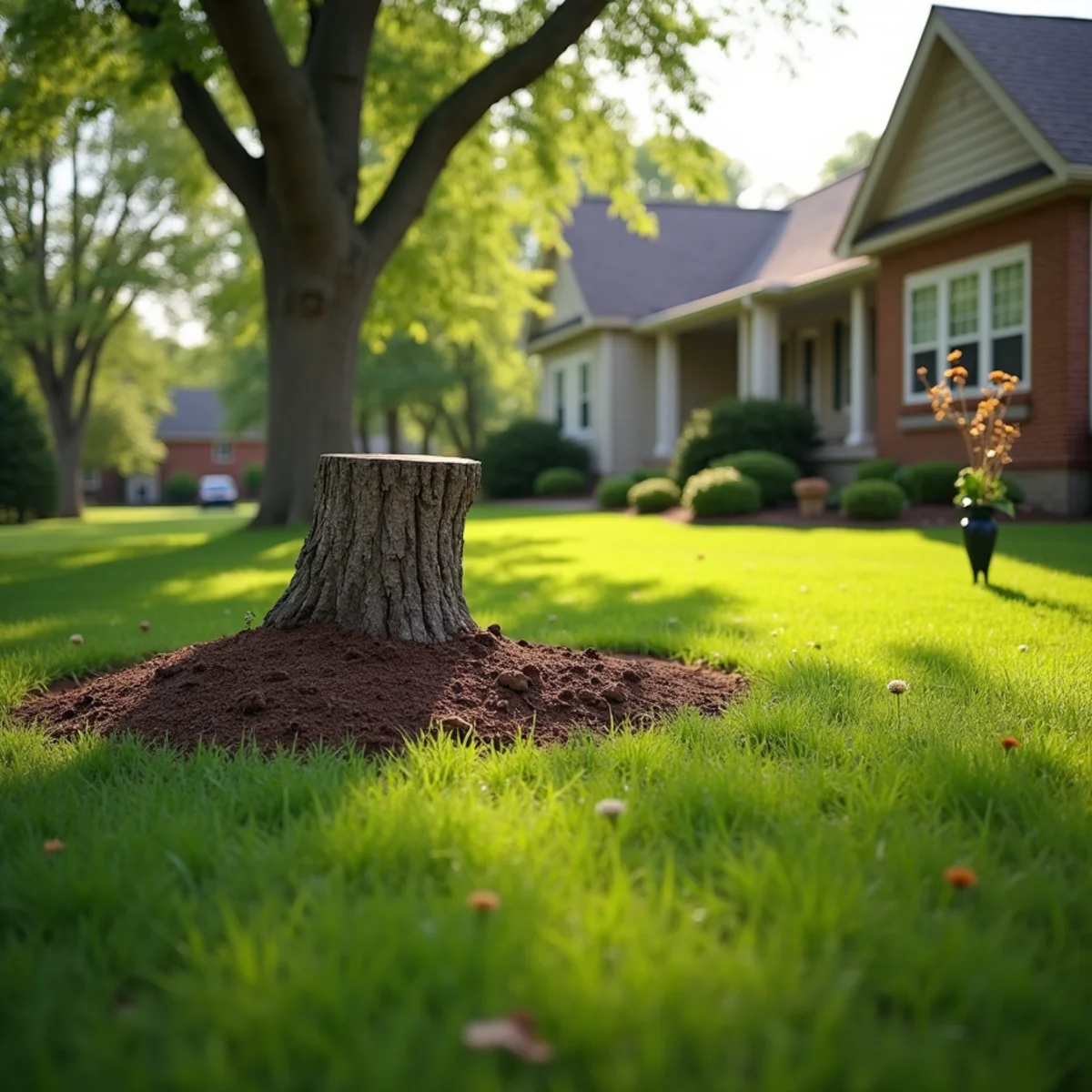
The third step is backfilling the cavity with clean, nutrient-dense Central Illinois topsoil. Avoid using cheap fill dirt packed with clay clods or rocks; instead, use pulverized, weed-screened black loam mixed with 10 to 15 percent aged leaf compost. Fill the hole until the fresh soil mounds approximately 1 to 2 inches higher than the surrounding lawn surface to account for natural settling over subsequent weeks. Backfilling the cavity with premium Central Illinois black loam topsoil mixed with compost provides the ideal growing medium for lawn seed.
Step 5: Choosing the Right Seed Blend for Central Illinois Lawns
Settling management is crucial to avoid developing an unsightly depression or sinkhole where the stump once stood. Tamp the imported topsoil in 3-to-4-inch lifts using a hand tamper or your feet, and water the area deeply with a garden hose to eliminate hidden air pockets. Finish by grading the surface perfectly flush with the surrounding turf using a landscape rake. Compacting topsoil in layers and soaking with water eliminates hidden air pockets, preventing future sunken depressions where the stump stood.
Step 6: Sodding vs. Reseeding: Comparing Costs and Timelines
Selecting the proper turfgrass variety ensures long-term lawn density. For Central Illinois residential lawns, a blend of 80 percent Turf-Type Tall Fescue (TTTF) and 20 percent Kentucky Bluegrass (KBG) provides the ultimate combination of drought tolerance, heat resilience, deep root penetration, and self-repairing rhizome density. For shady areas beneath companion trees, incorporate fine fescues (such as creeping red or chewings fescue). A blend of 80 percent Turf-Type Tall Fescue and 20 percent Kentucky Bluegrass delivers deep rooting, drought resilience, and self-repairing density.
Step 7: Germination, Irrigation and First-Mow Best Practices
Broadcast the grass seed evenly at a rate of 6 to 8 pounds per 1,000 square feet, lightly raking the seed into the top quarter-inch of soil to ensure firm seed-to-soil contact. Cover the seed with a thin protective layer of clean, weed-free straw or peat moss to retain moisture and prevent bird foraging. Keep the seedbed consistently moist with light, daily sprinkler passes for 14 to 21 days until germination is complete, transitioning to deeper, less frequent watering once grass reaches mowing height. Light daily watering until germination ensures rapid seed establishment, restoring a seamless green lawn with zero trace of the old tree.
Frequently Asked Questions About Reseeding After Stump Grinding
No. Raw wood chips consume all soil nitrogen to decompose, starving grass seedlings. You must excavate the chips 4 to 6 inches deep and replace them with rich topsoil.