
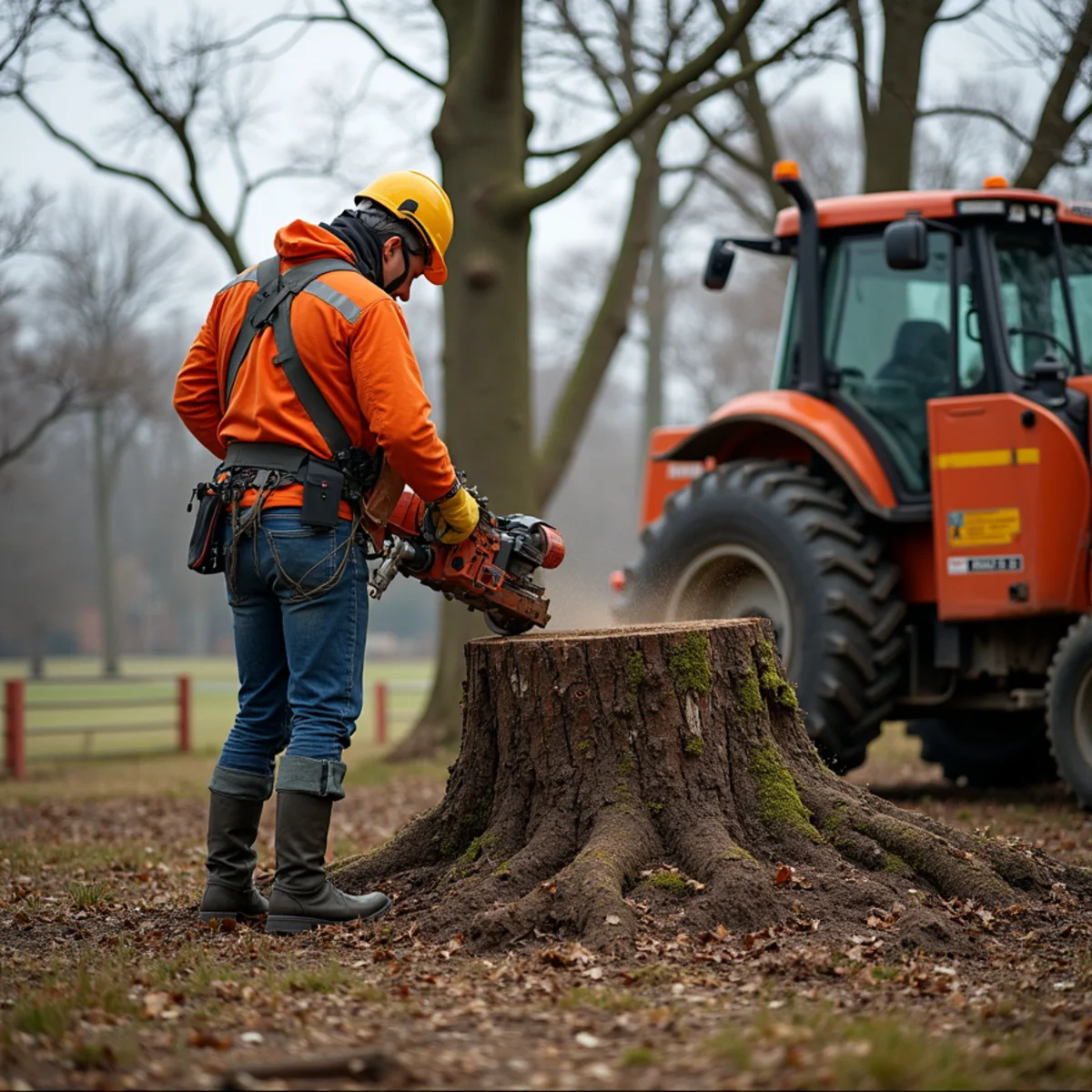
How Professional Stump Grinding Costs Are Calculated in Springfield
For homeowners across Springfield, Chatham, and surrounding Sangamon County, deciding what to do with a stubborn tree stump usually comes down to practical budgeting. Whether you recently had a diseased ash felled or inherited weathered oak stumps from a previous property owner, understanding local pricing structures helps you budget effectively. In Central Illinois, professional residential stump grinding generally costs between $150 and $450 for a single standalone stump, with multi-stump projects receiving significant volume discounts. Most professional tree services quote based on measured diameter inches—typically $3.00 to $4.50 per inch—combined with a standard baseline mobilization minimum of $125 to $150 to cover transport, fuel, machine wear, and utility safety clearance. In Sangamon County, professional estimates reflect both the equipment overhead required to operate commercial machinery and the logistical time required to transport tracked equipment between project sites.
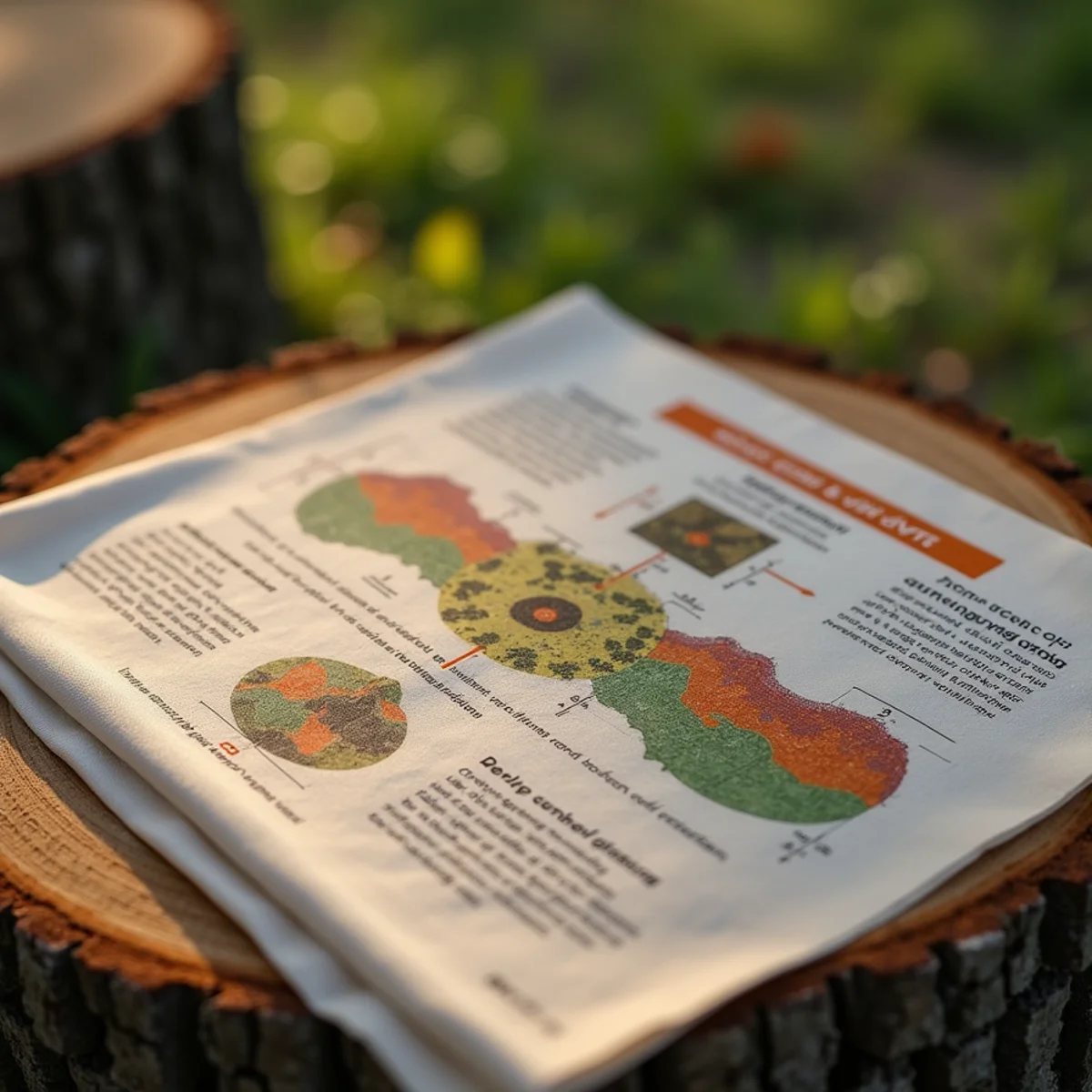
Measuring the True Stump Diameter: Why the Root Flare Matters
A frequent misunderstanding among homeowners is how stump diameter is officially measured. Many people take a tape measure across the top flat cut face of the stump. However, commercial grinding machinery must mill out the entire root crown, including the expansive lateral buttress flares where the trunk angles into the soil. A pin oak trunk that measures 22 inches across the top cut can easily widen to 36 or 40 inches where it meets the turf. Because tungsten-carbide cutter teeth must excavate this entire flared perimeter to prevent future rot and sinkholes, professional arborist estimates reflect the widest measurement taken at ground level. When commercial tungsten-carbide teeth contact hidden root flares, the machinery must steadily mill through lateral anchor plates, which dramatically increases machine runtime compared to narrow trunk cuts.
Need Professional Advice for Your Trees?
Call our local dispatch desk at (858) 780-5212. We provide prompt on-site evaluations across Springfield and Sangamon County.
Key Pricing Variables: Hardwood Density, Buried Obstacles and Travel Distance
The physical density and species of the tree also exert major influence on project pricing. Dense Midwestern hardwoods—such as white oak, bur oak, shagbark hickory, and hedge apple (osage orange)—feature tight grain structures that require slower machine feed rates and accelerate cutter tooth wear. Grinding an old 30-inch hedge stump can take twice as long as chewing through a soft pine, cottonwood, or willow of identical dimensions. Furthermore, older stumps that have accumulated embedded rocks, fencing wire, or decorative river gravel in their root crevices necessitate careful hand clearing to avoid shattering expensive carbide teeth. In Central Illinois soils, old oak and hickory stumps often absorb subterranean mineral deposits, turning dry root wood into extremely hard, abrasive material that requires frequent tooth sharpening.
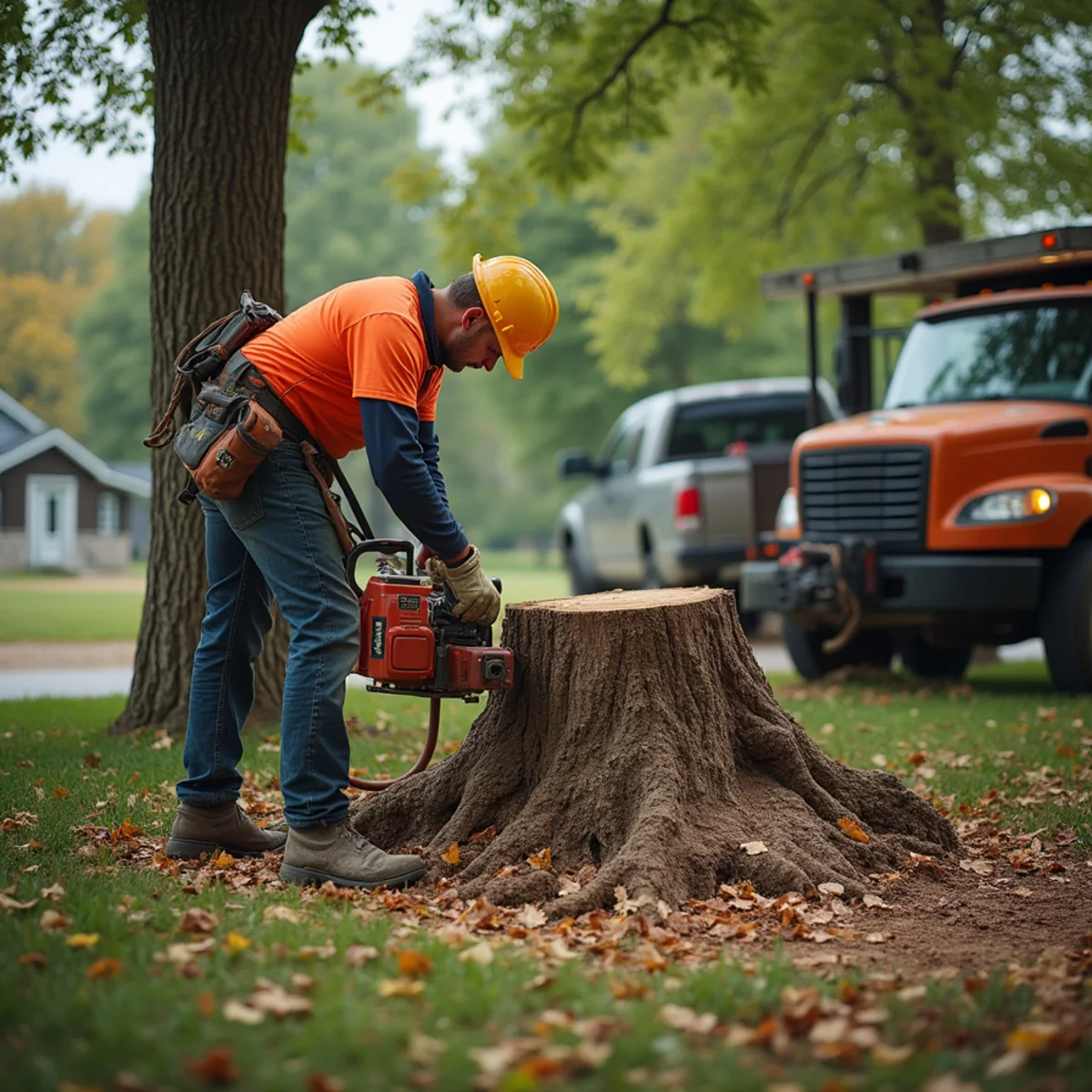
Surface Roots and Radial Trenching: The Hidden Lawn Add-Ons
Surface root chasing represents another critical pricing consideration across Central Illinois properties. Shallow-rooted tree species like silver maples, green ash, and river birch frequently send thick lateral roots sprawling across lawn surfaces, sometimes extending 15 to 25 feet away from the main trunk flare. If your goal is smooth lawn mowing, installing fencing, or laying fresh sod, these surface roots must be trenched and pulverized below mower blade height. Tree services typically bill surface root chasing as an add-on line item based on linear feet or hourly machine runtime. Radial trenching along extensive silver maple or river birch roots requires specialized horizontal cutting sweeps, ensuring lawn mowers can pass cleanly without striking blade-dulling wood ridges.
Equipment Tiers: From Portable 35-Inch Units to Heavy Tracked Grinders
The type of grinding equipment required for your property can also influence mobilization costs. Open-front yards with wide driveway access permit large commercial 60-horsepower tow-behind or heavy tracked grinders to complete operations rapidly. However, fenced backyards with standard 36-inch pedestrian gates require specialized compact equipment. High-end tree services invest in self-propelled tracked units with a 35-inch chassis that glide through residential gates with zero fence disassembly, protecting both customer budgets and property boundaries. Tracked commercial grinders distribute equipment weight evenly, ensuring that residential lawns in communities like Chatham and Jerome remain free from deep wheel impressions.
What Should Be Included in a Written Stump Grinding Quote
A professional written quote should clearly delineate what services are included beyond mechanical grinding. Basic economy services simply pulverize the stump 6 to 8 inches below grade and backfill the resulting wood shavings into the hole, leaving the homeowner to manage the wood mulch mound. Premium full-service packages include grinding 10 to 14 inches deep, chasing all primary lateral surface roots, vacuuming or loading excess mulch for haul-off, backfilling the void with clean Central Illinois topsoil, and applying matching lawn grass seed. Always confirm whether cleanup and utility markings through JULIE 811 are bundled into your bid. Clear itemization prevents unexpected surprises regarding whether ground wood shavings are left mounded for natural settling or completely excavated and replaced with clean topsoil.
DIY Rental Grinders vs. Professional Tree Contractors: A Real Cost Analysis
Many property owners consider renting a small stump grinder from local hardware stores to save money. However, rental units typically feature small 9-to-13-horsepower engines and dull teeth designed for light brush. These small machines lack the hydraulic torque to penetrate dense Sangamon County illite clay and tough oak root plates, often turning an afternoon project into an exhausting two-day ordeal of belt slipping and jarring physical strain. When factoring in rental deposits, truck transport trailers, fuel, and the cost of repairing underground lines struck without JULIE 811 marking, hiring a fully insured local arborist is usually more economical and far safer. In addition, small consumer rental machines lack the protective chip curtains and heavy steel debris guards that commercial contractors utilize to protect nearby windows and siding.
Frequently Asked Questions on Stump Grinding Prices in Sangamon County
Seasonal timing in Sangamon County also affects project scheduling and rates. Late autumn and frozen winter ground conditions provide ideal opportunities for stump grinding because firm soils support heavy machinery with zero risk of lawn rutting. During rainy spring months, wet turf requires laying composite ground protection mats, which reputable contractors provide as standard operating procedure to keep properties pristine. Booking stump grinding during the late autumn or dry winter months allows homeowners to take advantage of off-peak arborist scheduling across the Springfield metropolitan area.
Frequently Asked Questions on Stump Grinding Prices in Sangamon County
A standard 24-inch stump with moderate root flare typically costs between $160 and $240 in Springfield. If the root flare extends wider or surface roots must be chased across the lawn, the total quote usually ranges from $260 to $310.