The Core Technical Difference: Milling vs. Complete Excavation
Following a tree removal project on your Springfield or Central Illinois property, you face a clear choice regarding what to do with the remaining wood below ground level. Homeowners frequently use the terms 'stump grinding' and 'stump removal' interchangeably, but in the professional arboricultural industry, they refer to two completely distinct mechanical procedures with vastly different costs, equipment requirements, and lawn impacts. Understanding how each method works ensures you select the right solution for your specific landscape goals. Choosing between mechanical stump grinding and complete stump excavation depends on whether your priority is minimal lawn disruption or total subterranean root extraction.
Lawn and Landscape Disruption: Machine Footprint Analysis
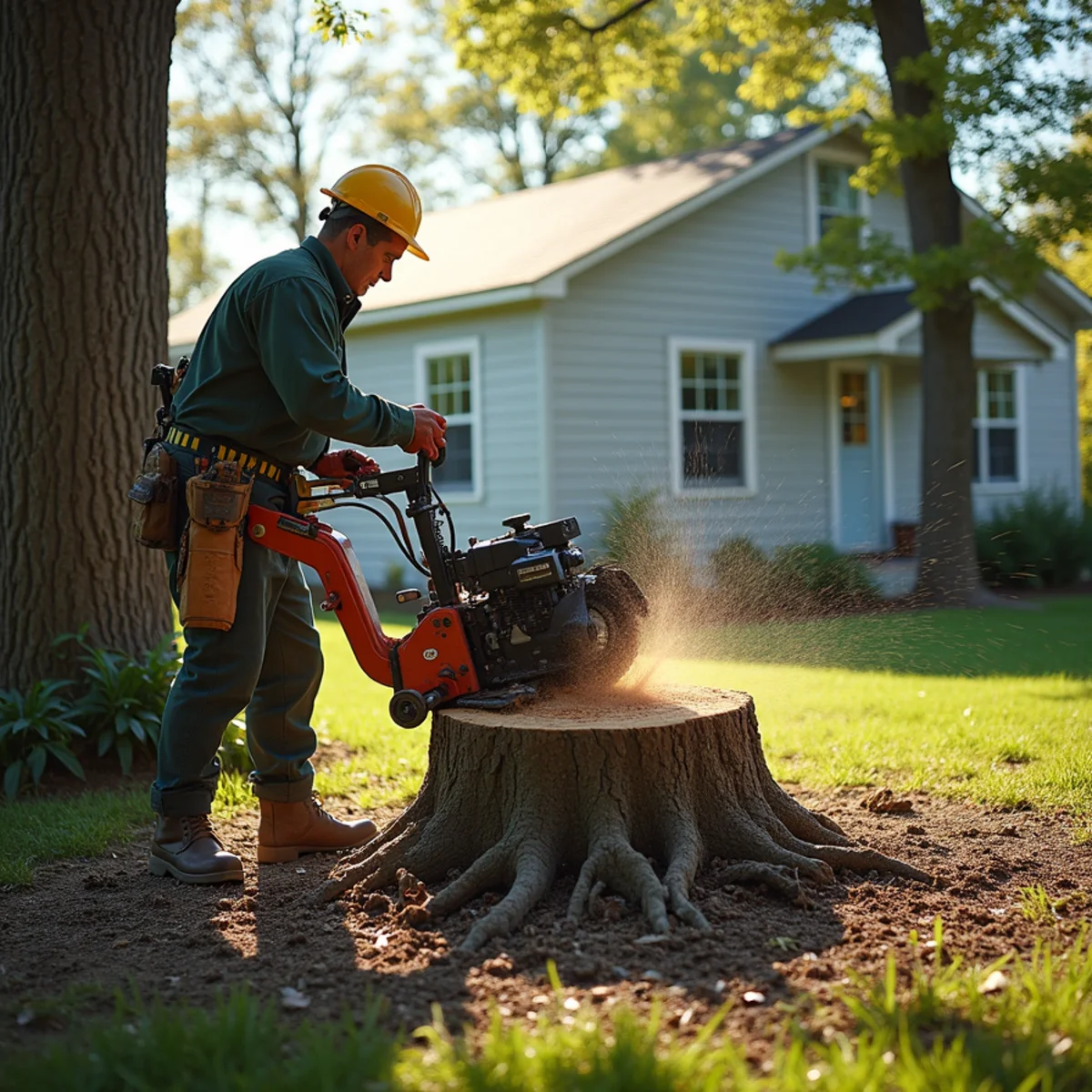
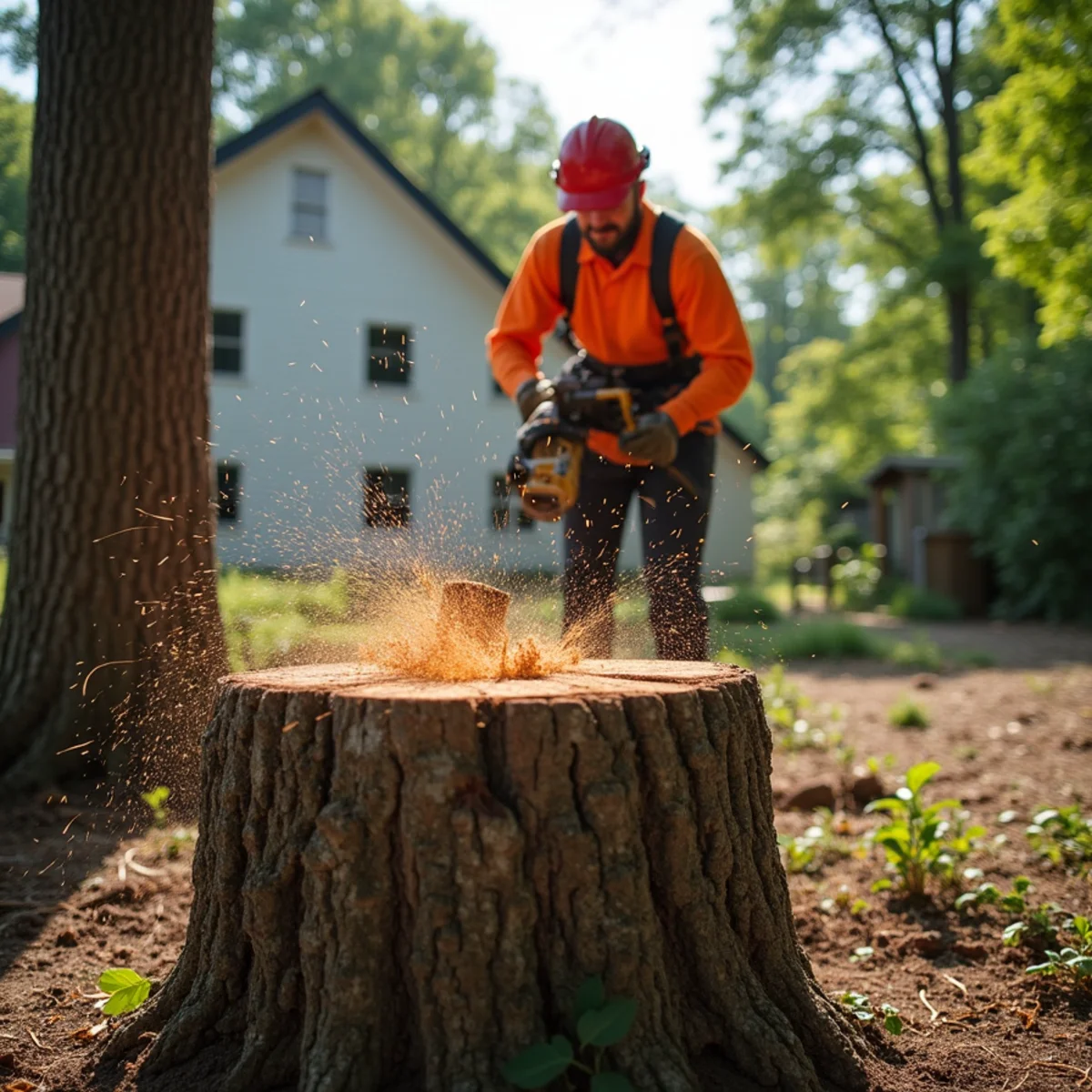
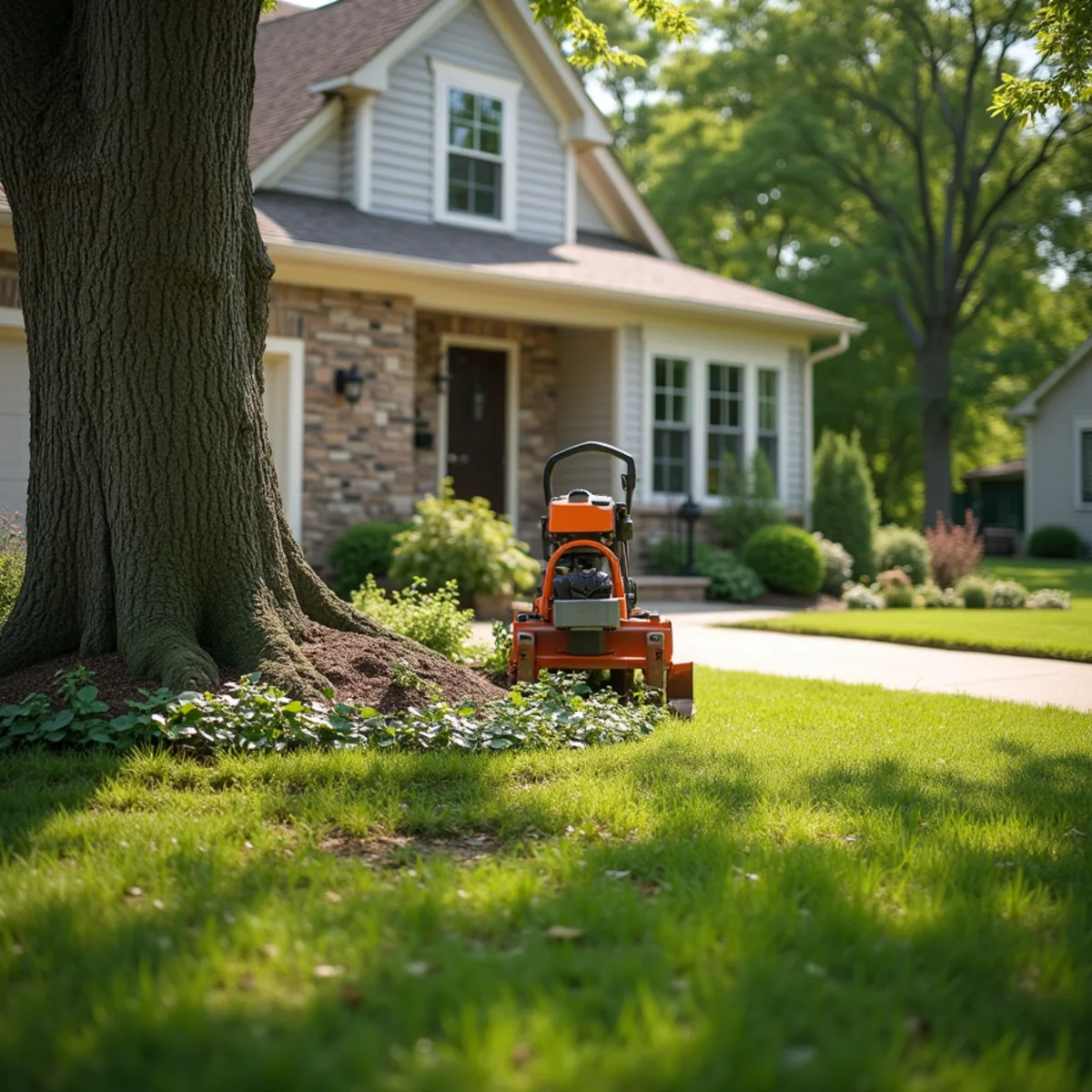
Stump grinding is a targeted mechanical process that utilizes a high-powered spinning cutter wheel equipped with tungsten-carbide teeth to chip and pulverize the stump into small wood shavings. The machine grinds the trunk wood from 6 to 18 inches below grade level, milling out the primary root crown and lateral surface flares while leaving the deep underground root network to decompose naturally within the soil. The surrounding turf remains largely undisturbed, making it the preferred method for residential yards. Commercial stump grinders mill the stump core and primary lateral flare 8 to 14 inches below grade, allowing deep root networks to decompose naturally.
Need Professional Advice for Your Trees?
Call our local dispatch desk at (858) 780-5212. We provide prompt on-site evaluations across Springfield and Sangamon County.
Cost Comparison: Why Mechanical Grinding Is Much More Economical
Complete stump removal (often termed stump excavation), by contrast, involves digging out the entire subterranean root ball using a full-sized backhoe, mini-excavator, or tracked skid-steer with a root ripper attachment. The excavator operator trenches around the perimeter, severing all lateral roots, before pulling the entire multi-ton root ball out of the earth. This process creates a massive crater—often 6 to 10 feet wide and several feet deep—and generates substantial heavy equipment traffic across your lawn. Full stump excavation requires large excavators or backhoes to dig out the entire root ball, creating massive craters and requiring heavy dump truck haul-off.
When Complete Stump Removal (Excavation) Is Actually Necessary
The cost difference between the two approaches is substantial. Standard residential stump grinding in Sangamon County typically costs between $150 and $450 per stump, depending on diameter and surface roots. In contrast, complete backhoe stump excavation generally ranges from $800 to $2,500 or more per stump. Excavation requires heavy transport trailers, multiple machine operators, dump truck mobilization, and off-site tipping fees for heavy soil-encrusted root balls at municipal landfills. Mechanical stump grinding is vastly more economical for residential properties, avoiding the substantial excavation, transport, and landfill tipping fees of whole root balls.
Managing the Byproducts: Mulch Shavings vs. Massive Dirt Clods
While stump grinding is the ideal choice for ninety-five percent of residential homeowners, there are specific situations where complete mechanical excavation is necessary. If you are preparing ground for new construction—such as pouring concrete footings for a home addition, installing an in-ground swimming pool, or trenching for deep foundation footings—all woody biomass must be completely excavated to prevent structural settling. Complete excavation is also required if you plan to plant a large mature tree in the exact same footprint. Complete excavation is strictly necessary when preparing ground for building foundations, home additions, swimming pools, or repaving driveways.
Underground Utility Risks: Precision Grinding vs. Backhoe Trenching
Disposal of byproducts represents another major operational distinction. Stump grinding produces clean, fine wood chips blended with native topsoil. This material can be immediately backfilled into the grinding cavity, raked level, or repurposed as moisture-retaining organic mulch in nearby flower beds. Excavating a root ball leaves a massive boulder of intertwined roots, rocks, and compacted clay that cannot be processed on-site and must be loaded into a commercial dump truck for disposal. Stump grinding produces fine organic mulch that can be backfilled on-site, whereas whole excavated root balls leave massive dirt-clotted boulders that cannot be repurposed.
Replanting and Lawn Reseeding: Preparing the Site Post-Work
Underground utility safety is significantly easier to control with mechanical stump grinding. Because commercial grinders operate within a tightly controlled, visible radius, operators can easily stop within inches of marked underground lines. Backhoe excavation, however, exerts heavy pulling force on deep subterranean roots that may intertwine with buried gas laterals, sewer pipes, or electrical conduits, creating elevated risks of severed infrastructure even when lines are marked. Mechanical grinding offers surgical depth control near marked utility lines, whereas backhoe excavation risks snagging and rupturing deep buried infrastructure.
Frequently Asked Questions About Stump Grinding vs. Excavation
For homeowners seeking an immaculate lawn restoration, stump grinding offers the cleanest path forward. Once the stump is milled 10 to 12 inches below grade, excess chips are removed, fresh Central Illinois loam topsoil is leveled into the void, and grass seed or sod is installed. Within a few weeks, the lawn is completely restored with zero lingering evidence of the old tree. Following stump grinding, removing excess mulch and backfilling the cavity with clean topsoil enables homeowners to reseed and restore seamless green turf.
Frequently Asked Questions About Stump Grinding vs. Excavation
No. Once the stump is milled below grade, the severed root system is cut off from sunlight and foliage, preventing growth and allowing roots to decompose naturally into soil.