
Typical Price Ranges for Residential Tree Removal in Central Illinois
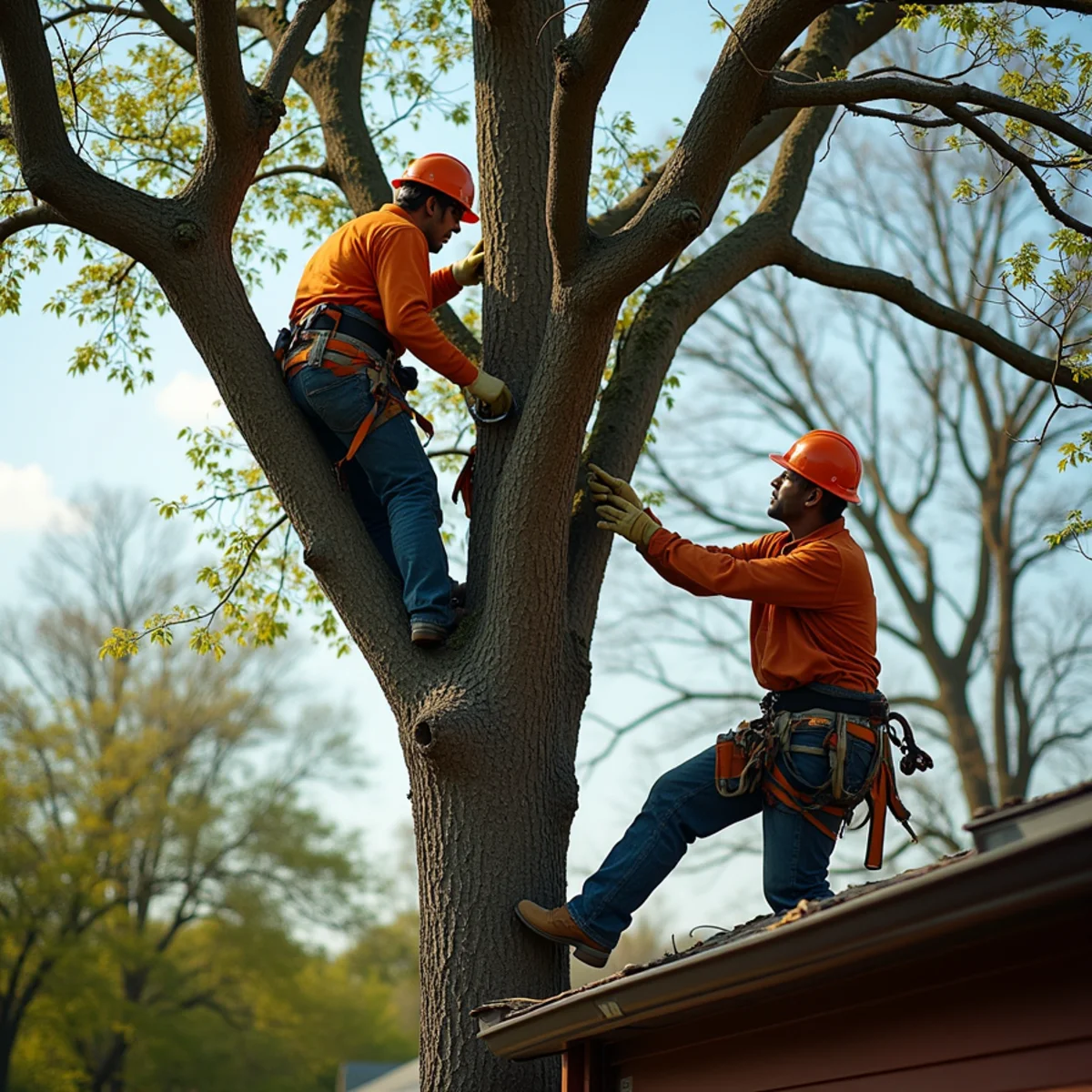
Tree removal is one of the most substantial property maintenance investments a Central Illinois homeowner will encounter. Across Springfield, Jerome, Leland Grove, and Sangamon County, professional tree removals typically span from $450 for smaller ornamental trees to upwards of $2,800 or more for massive, storm-compromised hardwoods. Because every tree grows in a unique environment with distinct hazards and access constraints, tree care pricing cannot follow an arbitrary flat-rate structure. Understanding what drives these costs empowers homeowners to evaluate contractor bids intelligently. Detailed written quotes provide transparency, allowing homeowners to see exact labor allocations, equipment staging requirements, and haul-off provisions before project commencement.
Tree Height, Trunk Caliper and Canopy Volume Explained
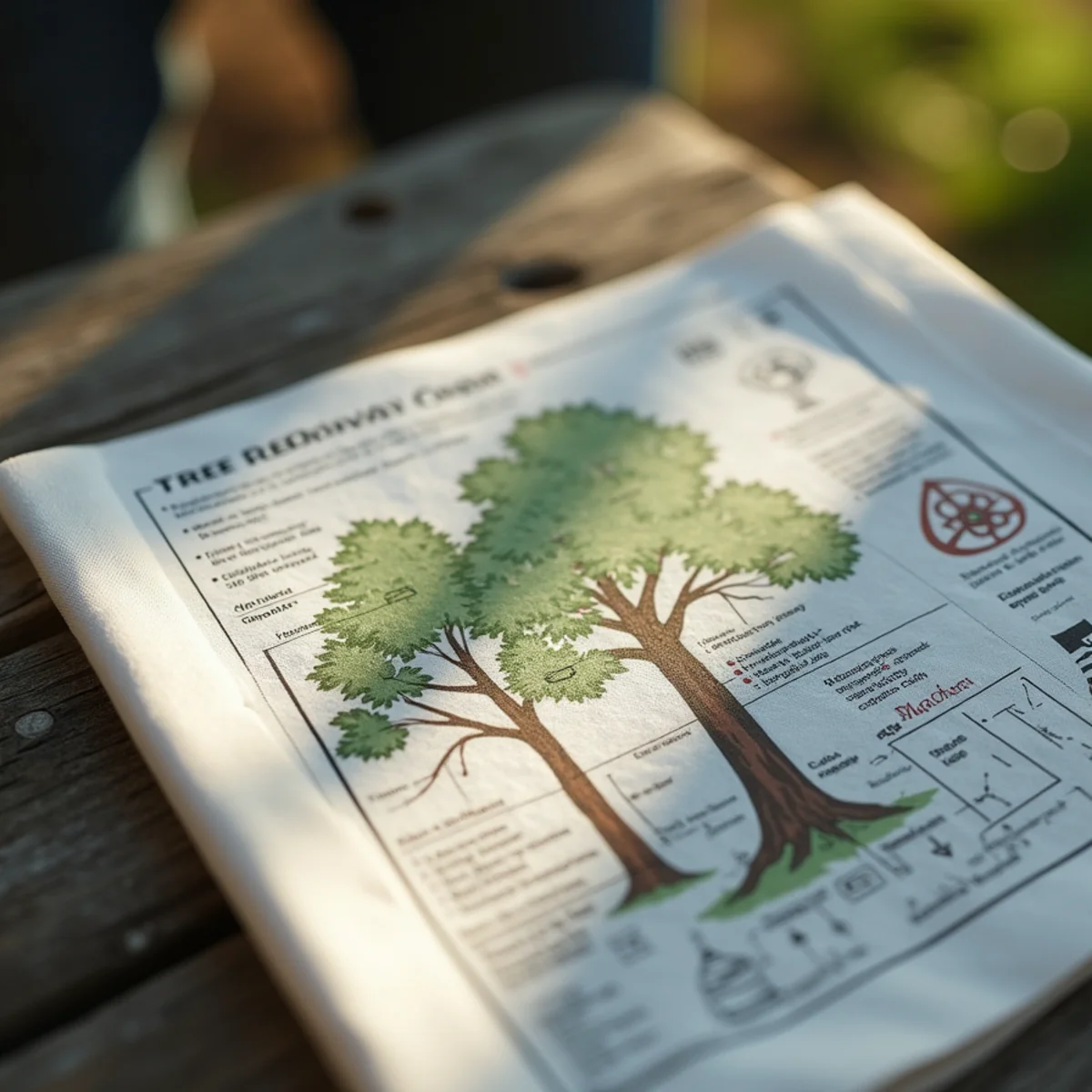
The primary cost driver is physical tree geometry: overall height, trunk diameter at breast height (DBH), and total canopy spread. Small trees under 30 feet—such as redbuds, crabapples, or young river birches—can typically be dismantled in two to three hours by a small crew. In contrast, 70- to 90-foot mature pin oaks, sycamores, or silver maples present hundreds of cubic feet of heavy timber that must be methodically rigged, lowered, bucked, and transported, demanding hours of labor from certified tree climbers and heavy equipment operators. Heavy scaffold branches on mature oaks and sycamores can weigh several tons each, requiring specialized rigging friction brakes to control descents over manicured lawns.
Need Professional Advice for Your Trees?
Call our local dispatch desk at (858) 780-5212. We provide prompt on-site evaluations across Springfield and Sangamon County.
Site Access and Target Obstacles: Roofs, Pools and Fences
Proximity to structural obstacles is the second major variable in tree removal estimation. A large dead ash tree standing in the center of an open five-acre farm pasture in New Berlin can be notched and directional-felled in minutes. However, that exact same tree situated between two multi-story homes in Springfield's historic Washington Park neighborhood—with branches overhanging custom slate roofs, copper gutters, and an in-ground swimming pool—requires slow, surgical sectional dismantling using Port-a-Wrap friction brakes or heavy crane hoisting. In historic Springfield neighborhoods where property setbacks are narrow, crane-assisted picks allow tree sections to be lifted vertically over house roofs, eliminating damage to delicate landscaping.
Why Dead and Dying Trees Often Cost More to Remove Safely
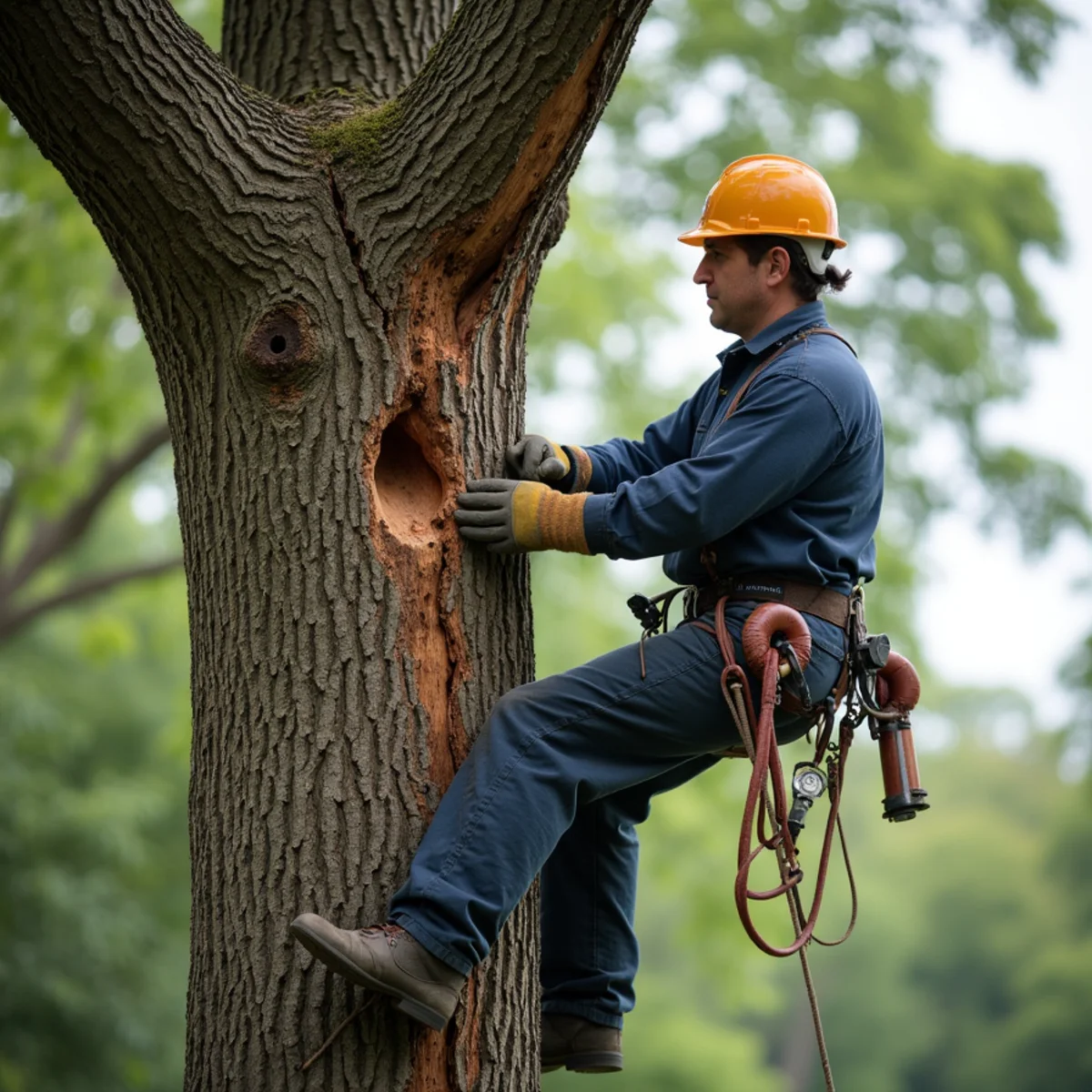
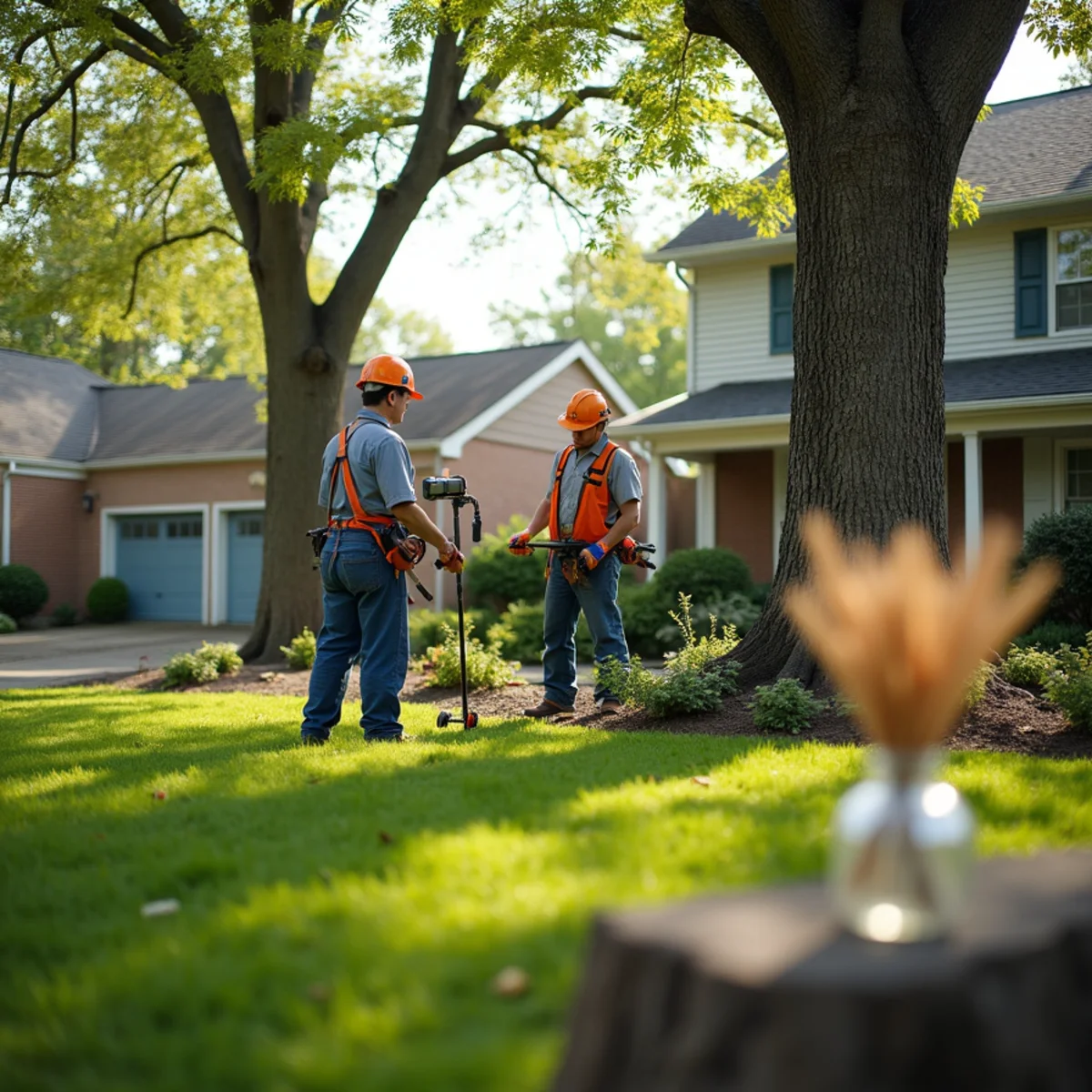
Many property owners are surprised to learn that completely dead trees often cost more to remove than healthy, living specimens. When invasive pests like Emerald Ash Borer or vascular diseases like Dutch elm disease kill a tree, the wood rapidly loses its cellular moisture and flexibility. Dead ash limbs turn brittle within months, making it hazardous for climbers to tie in or ascend. Tree services must deploy expensive aerial bucket trucks, spider lifts, or dedicated mobile cranes to dismantle the tree from overhead, which increases equipment expenses. Climbing arborists face severe life-safety risks when attempting to tie into dead ash limbs, as internal wood rot can cause brittle branches to shear off without warning.
Utility Line Clearances: Navigating CWLP and Ameren Buffer Zones
Overhead electrical infrastructure introduces strict safety requirements that impact project logistics. Within Springfield city limits, City Water, Light & Power (CWLP) operates overhead electric feeds, while Ameren Illinois serves suburban and rural territories. Working near energized power lines demands specialized line-clearance equipment, insulated aerial units, and strict adherence to OSHA 1910.269 standards. Coordination with utility dispatchers for line insulation or temporary service drops ensures worksite safety. Tree contractors coordinate directly with CWLP and Ameren Illinois dispatchers, ensuring that energized primary lines are temporarily shielded or de-energized during critical rigging maneuvers.
What to Look for in an Itemized Tree Removal Proposal
When comparing written tree removal estimates, scrutinize the specific scope of work detailed by each contractor. A low-ball estimate often omits essential elements—such as complete branch chipping, heavy log haul-off, lawn raking, or stump grinding. More critically, cheap contractors frequently lack $2,000,000 in commercial general liability insurance or comprehensive workers' compensation coverage, leaving the homeowner legally vulnerable if a falling limb damages a neighbor's house or a worker is injured on-site. Checking for comprehensive workers' compensation coverage is essential, as general liability insurance alone does not protect homeowners if a tree worker sustains an on-site injury.
Permits, Inspections and Municipal Parkway Tree Regulations
Municipal regulations also play an important role across Central Illinois communities. If the tree in question is situated on the public parkway between the sidewalk and street curb, municipal tree codes may govern removal permissions. In Springfield, the Office of Public Works oversees parkway forestry, while private residential trees remain the homeowner's responsibility. Choosing an arborist familiar with local codes ensures full legal compliance before cutting begins. In municipal parkways and public easements, unauthorized tree removal can result in municipal fines and mandatory replanting restitution under municipal forestry codes.
Frequently Asked Questions on Tree Removal Pricing in Springfield
Timing your tree removal can also generate meaningful savings. While emergency storm responses incur premium after-hours dispatch fees, proactive winter tree removal often comes with advantageous scheduling and rates. During Central Illinois winters, frozen turf can support heavy equipment with minimal lawn impact, and deciduous trees have shed their foliage, reducing total debris volume and chip disposal weight. Winter tree removals offer notable advantages for Central Illinois homeowners, as dormant deciduous canopies generate less debris volume and frozen soils support equipment staging effortlessly.
Frequently Asked Questions on Tree Removal Pricing in Springfield
Removing an 80-foot mature oak tree in a residential neighborhood typically ranges from $1,400 to $2,600, depending on proximity to houses, overhead electric lines, and machine access.